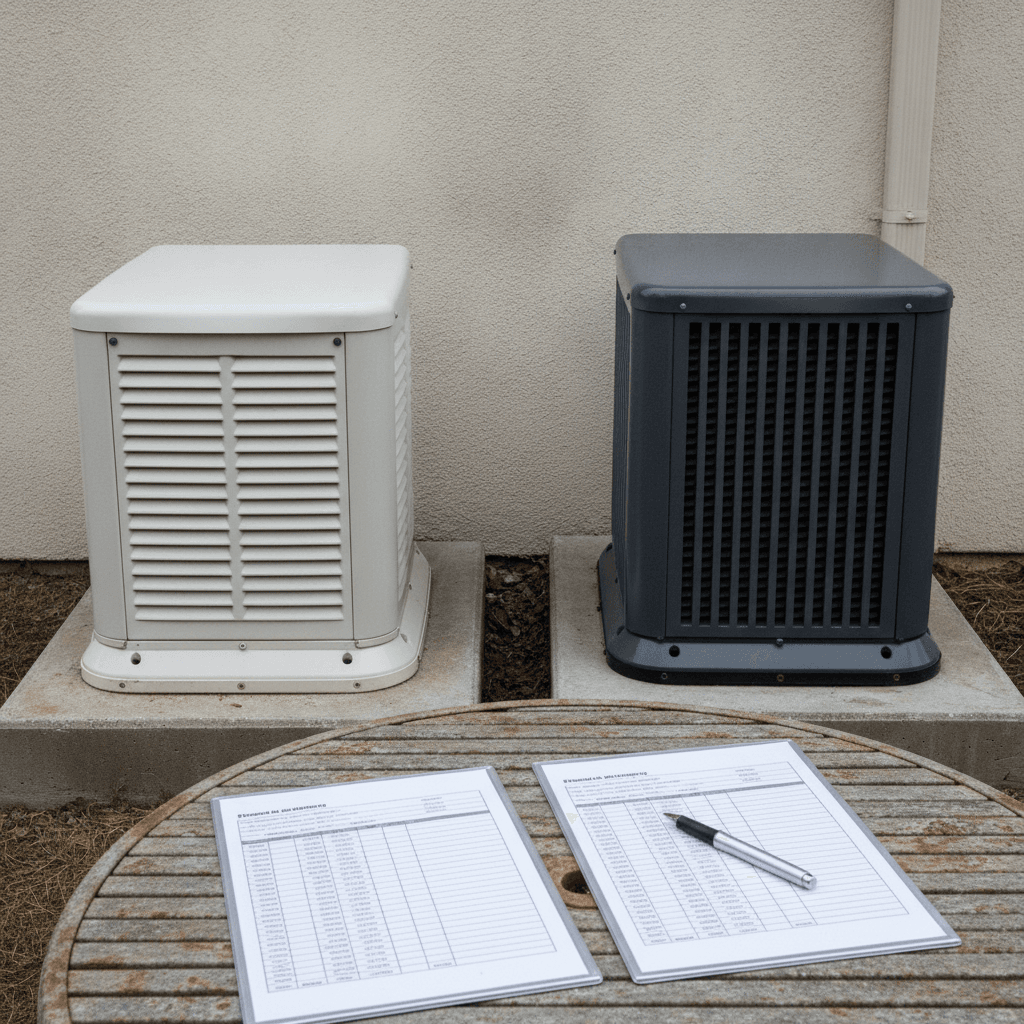
Generac vs Kohler compared for real buyers. Dealer network, warranty, self-test noise, and why the installed cost is the same for both.
Comparison
Quick answer: Both Generac and Kohler build credible whole-house standby generators, and the installed cost is the same $12,000 to $18,000 for either. Generac's real advantage is the largest dealer and parts network in the country, which means faster service almost anywhere. Kohler counters with a quieter self-test, an all-aluminum enclosure, and equally strong warranty options. Pick Generac for network reach, pick Kohler if you have a strong local dealer and value the quieter, corrosion-resistant build.
Best for
Buyers who have narrowed it to the two default standby brands and want the tradeoffs that actually differ, not a spec-sheet tie.
Wrong fit
Buyers who have not yet decided whether standby is the right category at all. Sort the outage pattern first.
Tradeoff
Generac buys you the deepest service and parts network almost anywhere. Kohler buys you a quieter, aluminum-clad unit, but it only pays off if you have a strong local dealer.
Both Generac and Kohler build credible whole-house standby generators, and the installed cost is the same $12,000 to $18,000 either way. So this is not a good-versus-bad question. It is a which-one-fits-you question, and the answer turns on one thing more than any other: whose dealer actually shows up in your area.
Generac's real advantage is the largest dealer and parts network in the country, by a wide margin. Kohler counters with a quieter self-test, an all-aluminum enclosure, and warranty terms that match Generac's on paper. We don't sell generators. We save you from buying the wrong one, and here the wrong one is usually the brand with no service tech within an hour of your house.
Read that table and the pattern is clear. On raw specs, kW range, warranty, and installed cost, these two are close to a tie. The differences that decide it are network reach, self-test noise, and enclosure, so those are the sections worth your time.
Dealer and Parts Network: Generac's Real Advantage
This is the whole ballgame, and it is where Generac wins. Generac is the dominant home standby brand in the US, roughly 70 percent of the market by most industry estimates, and that scale shows up as dealers, trained installers, and parts on the shelf almost everywhere. When a control board or a battery charger fails in year four, a deep network is the difference between a same-week repair and a unit that sits dead through the next storm waiting on a part.
Kohler's network is real and well regarded, but it is thinner in much of the country. In a metro with a strong Kohler dealer, you get excellent service. Two counties over, you may be waiting. Before you choose Kohler, find the actual dealer who would install and service it, and ask about their parts stock and response time. That one phone call tells you more than any spec sheet.
Warranty: Closer Than the Marketing Suggests
Both brands start at a 5-year limited warranty. Generac lists 5 years on the Guardian line. Kohler lists 5 years or 2,000 hours, whichever comes first, and makes a point of covering parts, labor, and dealer travel. Both can be extended to roughly 10 years for a fee.
On paper this is a wash, and you should treat it that way. What matters more than the printed term is who honors it. A 5-year warranty backed by a dealer 20 minutes away beats a longer one backed by a dealer you have to chase. If a long standard warranty is the thing you care about most, note that Briggs & Stratton (7 years) and Champion (10 years) beat both of these, which we cover in the best home standby generators roundup.
Self-Test Noise: Both Quieter Than They Used To Be
Every standby runs a weekly self-test, and it used to be the thing owners complained about most. Kohler earned a reputation for a quieter exercise cycle, and it still markets the low-speed mode and its sound-dampened aluminum enclosure hard. It is a genuinely neighbor-friendly unit.
Generac closed a lot of that gap with Quiet-Test mode, which runs the weekly exercise at about two-thirds of normal RPM, so the test is far less of an event than it was on older units. In practice both run in roughly the high-50s to mid-60s dBA range depending on model and how the enclosure is built, and both let you schedule the test for a civilized weekday hour. Kohler still tends to edge it on quietness, but the difference is smaller than the marketing implies. If a near-silent yard is your top priority, Kohler is the safer pick, just not by the margin you might expect.
Transfer Switch and Real Installed Cost: Basically a Wash
Both brands bundle an automatic transfer switch with their whole-house packages, and their larger air-cooled units typically ship with a whole-house or service-rated switch. On the install itself, the two are effectively identical. A 22kW to 24kW unit from either brand lands at $12,000 to $18,000 installed, because the pad, the gas line sizing, the transfer switch labor, the permits, and the two trades cost the same no matter whose logo is on the enclosure.
That is the point buyers miss when they agonize over the badge. The machine is a few thousand dollars of a five-figure project. If a dealer tries to sell you one brand on price, ask for the full installed quote after a site survey, because that is the only number that reflects the real difference, and usually there is barely any. The line items are broken down in the real cost of a whole-house generator.
Owner-Reported Service: Read the Volume Carefully
Search either brand and you will find complaint threads. Here is how to read them. Generac has far more units installed than anyone else, so it also has far more owners posting problems, good and bad. A big pile of complaints for the market leader is not the same as a high failure rate, and it is easy to mistake volume for quality. Kohler has fewer units in the field, so fewer reports, which can read as reassuring or simply as quieter.
The signal that actually matters is local. Ask your prospective installer how long they have serviced the brand, how fast they get parts, and what they do when a unit fails out of warranty. A specific answer from the person who will show up beats a hundred anonymous reviews. And whichever you choose, budget for the upkeep, because both run a weekly test and both want annual service, which we cover in generator maintenance cost.
Which One Fits You
Choose Generac if you want the safest bet on service and parts, live somewhere without a strong Kohler dealer, or simply want the brand every local electrician already knows. For most buyers in most places, this is the practical default, and it is not a downgrade.
Choose Kohler if you have a strong local Kohler dealer, want the quietest weekly self-test, or live near salt water where the all-aluminum enclosure earns its keep. When the dealer is there, it is an excellent unit and a real alternative to the default.
Either way, size the unit before you shortlist, because the wrong kW is a more expensive mistake than the wrong brand. Run your loads through what size generator do I need, decide on natural gas or propane, then match a brand to a vetted local installer in the brand directory.
Frequently Asked Questions
Is Generac or Kohler better?
Neither is better across the board. Both build credible whole-house standby generators and both install for the same $12,000 to $18,000. Generac wins on dealer and parts network reach, so service is faster in more places. Kohler wins on a quieter self-test and an all-aluminum enclosure. The right answer depends on which brand has a strong dealer near you.
Is Kohler quieter than Generac?
Slightly, but the gap has narrowed. Kohler built its reputation on a quiet exercise cycle and a sound-dampened aluminum enclosure. Generac's Quiet-Test mode now runs the weekly self-test at about two-thirds RPM, which closes much of the difference. Both land in roughly the high-50s to mid-60s dBA range depending on model. If a near-silent yard is your top priority, Kohler edges it, just not by much.
Do Generac and Kohler cost the same to install?
Effectively yes. A 22kW to 24kW unit from either brand runs $12,000 to $18,000 installed, because the pad, gas line, transfer switch, permits, and two trades cost the same regardless of brand. The machine is only a few thousand dollars of the total, so the badge barely moves the final invoice. Always compare full installed quotes after a site survey, not machine stickers.
Which has the better warranty, Generac or Kohler?
They are close to a tie. Generac starts at 5 years, Kohler at 5 years or 2,000 hours, and both extend to about 10 years for a fee. What matters more than the printed term is which dealer honors it and how fast they get parts. If you want a longer standard warranty, Briggs & Stratton offers 7 years and Champion offers 10.
Does Generac really have a bigger dealer network than Kohler?
Yes, and it is Generac's main advantage. Generac is the dominant US home standby brand, roughly 70 percent of the market by most industry estimates, which translates into more dealers, more trained installers, and more parts on the shelf nationwide. Kohler's network is strong in some regions and thin in others, so the difference is felt most when you need a repair fast.
Why are there so many Generac complaints online?
Mostly because there are so many Generacs. As the market leader with the largest installed base, Generac generates far more owner reports than any competitor, good and bad. A large pile of complaints for the leading brand is not the same as a high failure rate. Judge the brand by your local dealer's service record, not by raw review volume.
Should I pick the brand or the installer?
Lean toward the installer. A great local dealer running a Generac or a Kohler will serve you better than a mediocre one running your preferred badge. Both machines are credible, so the person who installs, permits, and services it is the bigger variable. Get two or three installed quotes and weigh the dealer as heavily as the brand.
Methodology
These guides are built from manufacturer documentation, public specifications, primary research where health claims matter, and repeated buyer questions that show up in real ownership and installation decisions.
Manufacturer responses can clarify pricing bands, warranty terms, support footprint, or common mistakes. They do not move a page up the shortlist on their own.